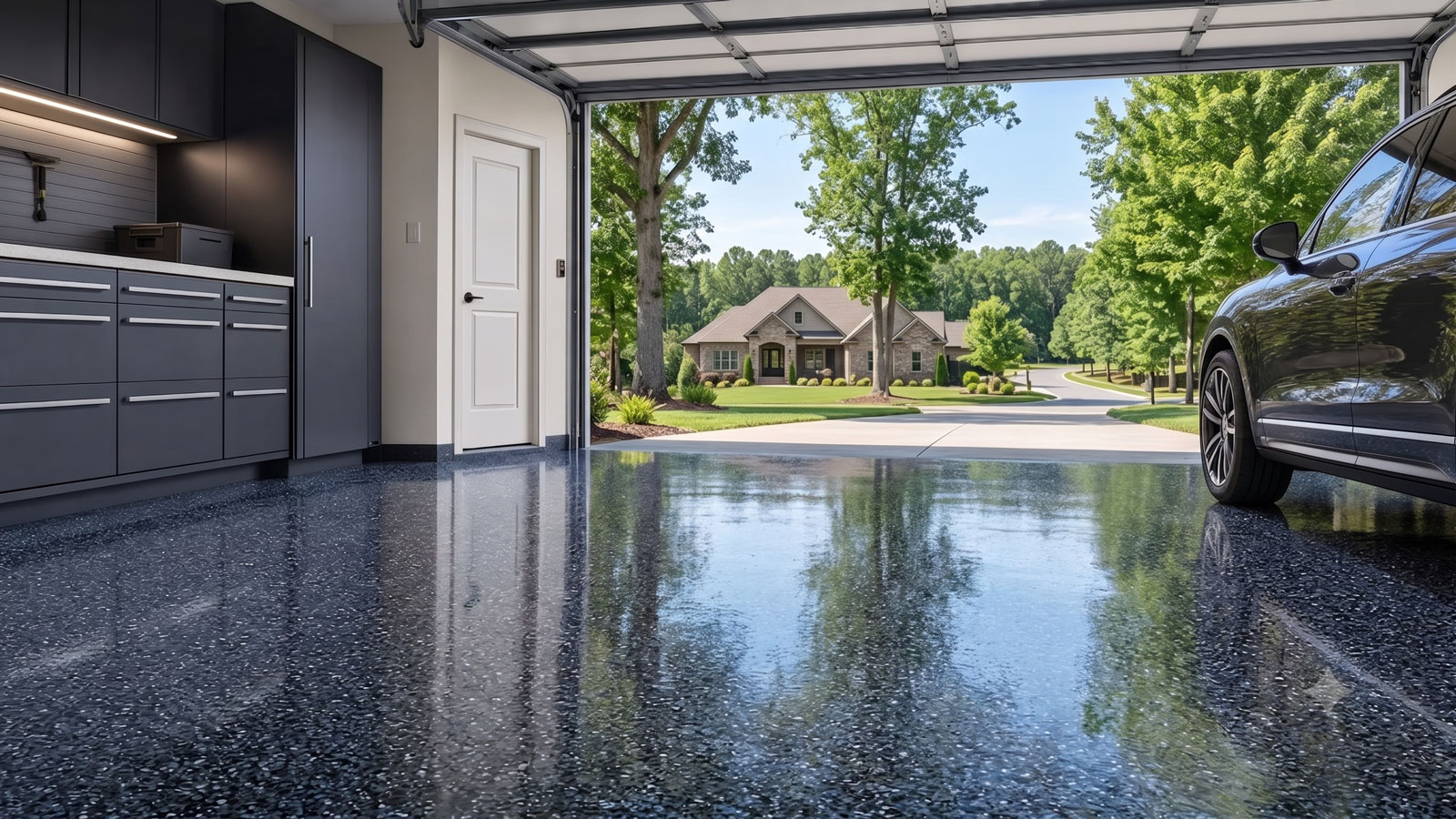
Garage Floor Coating in Rockford, IL
Floor Coating Services in Rockford, IL
In Rockford, garage coating decisions should account for existing concrete and local street conditions rather than assume every northern Illinois floor is alike. Rockford maintains 1,700 lane miles of streets. The snow plan includes 625 cul-de-sacs and 48 public lots. Those public facts cannot identify old paint, repairs or moisture at any single home.
Residential crews begin plowing at around two inches of accumulation. Snow-emergency odd/even parking rules shift at 8 a.m.. Winter vehicles may bring salty meltwater, grit and wet tires onto concrete, while water flowing through a doorway during rain creates a separate problem. Observe wet-car puddles separately from persistent slab dampness or rain entry.
Its street unit manages 780 miles of right-of-way and numerous storm sewers. A good Rockford estimate explains grinding, old-paint removal, cracks and joints, the chosen surface texture and realistic cure conditions. Where a garage serves as both parking and household storage, arrange alternative parking and space for workers before installation. Properly applied decorative flakes may simplify cleaning, but they cannot prevent exterior runoff or ongoing concrete movement.
Local Market Insight
Rockford maintains 1,700 lane miles of streets. Snow-emergency odd/even parking rules shift at 8 a.m.. The local record describes road and drainage responsibilities; it does not establish private slab damage. Homeowners should compare actual road residue and concrete condition before selecting a system.
What Affects the Cost of Garage Floor Coating in Rockford?
A Rockford garage coating quote should distinguish surface preparation from aesthetic choices. The snow plan includes 625 cul-de-sacs and 48 public lots. That public detail does not imply particular household repairs; inspect the actual concrete, paint, sealer and joints.
The proposal should itemize grinding, repairs, perimeter work, flake and topcoat choices, cleaning expectations and a product-specific cure schedule. Plan storage clearance and alternative parking where needed.
- Existing finish and repairs: A Rockford home might have bare concrete, painted floors or a later replacement slab. Assess the surface and old patches rather than guessing concrete age from neighborhood character.
- Winter street conditions: Residential crews begin plowing at around two inches of accumulation. That public policy offers context for winter vehicle tracking, but actual salt and grit deposits need to be observed at the property.
- Municipal drainage: Rockford maintains 1,700 lane miles of streets. Public stormwater responsibilities cannot guarantee water stays out of a garage. Look at actual driveway pitch, gutter outlets and door seals.
- Cracks and structural movement: Inspect joints, pits, cracked repairs and floor soundness. A decorative finish cannot stabilize changing concrete; correct serious substrate issues before coating.
- Garage access and layout: Steps, cabinets and storage reduce open grinding space. An accurate quote should include corners, wall edges, transitions and the removal of stored belongings.
- Finish and cure details: Flake color, texture and layer specifications change appearance and cost. Ask about cleaning winter deposits and the actual manufacturer-supported reopening time.
Call for a clear, project-specific estimate — or request one online.
Rockford Road Maintenance and Garage-Floor Residue
Rockford maintains 1,700 lane miles of streets. The snow plan includes 625 cul-de-sacs and 48 public lots. These specific numbers or municipal practices show how Rockford's public roadway and drainage systems differ from surrounding towns. A homeowner should not infer that all residential streets are treated the same way, and should not assume public street conditions prove that concrete inside a garage is deteriorating.
Residential crews begin plowing at around two inches of accumulation. Winter driving can transfer road grit and salty snowmelt to familiar parking positions. A coated surface on sound prepared concrete can help with cleanup, but maintenance is still needed. Examine actual deposits and whether an old coating is blistered, peeling or contaminated before proposing a fresh resin system.
Snow-emergency odd/even parking rules shift at 8 a.m.. If a vehicle returns wet, puddles beneath its wheels may be ordinary meltwater. Water crossing a garage-door threshold during rain is a distinct drainage problem. If the empty slab stays damp, a moisture investigation may be appropriate. Those distinctions should inform preparation and any separate grading or door-seal correction.
Grinding, oil cleaning, patch removal and treatment of joints should be tailored to the surface actually present. A glossy topcoat on poorly prepared paint or weak concrete can fail regardless of advertised system durability.
Coating a Working Garage in Rockford
Its street unit manages 780 miles of right-of-way and numerous storm sewers. This local public record may influence the household's winter parking plans, but it cannot tell the installer whether an individual floor is sound. Older structures can contain later concrete pours; newly finished floors can retain sealer or curing treatments. Inspect before selecting abrasive preparation.
In a garage used for vehicles, tools or stored sports equipment, access around shelves, step edges and doors affects work time. Discuss where cars will park while the coating cures, particularly during the colder months. The contractor should list necessary repairs separately from optional decorative choices.
Compare epoxy and polyaspartic through the complete system: surface profile, coatings and primer, texture for wet footwear, application temperature and curing requirements. A written scope should make maintenance expectations and return-to-service timing clear.
- Check bare concrete, old epoxy or paint.
- Inspect patches, cracks and joints.
- Observe water during rain at the doorway.
- Separate wet-car deposits from slab moisture.
- Relocate stored items for safe grinding.
- Get layer, texture and cure details in writing.
Frequently Asked Questions
What is a documented local consideration in Rockford?
Rockford maintains 1,700 lane miles of streets. The city's public infrastructure and driving conditions are useful context, but they don't diagnose a residential slab. Assess existing paint, grit and moisture before deciding on prep work.
Can winter road salt be tracked into Rockford garages?
Yes, winter driving can bring residue and slush onto concrete. The amount differs by vehicle and roads used. Inspect actual deposits and use suitable cleaning and a practical surface texture.
Will a coating fix water coming through my garage door?
No. Active driveway runoff or a failed seal should be corrected separately. A resin layer can support easier cleaning when properly installed, but does not resolve grading or structural defects.
Is epoxy or polyaspartic better in Rockford?
Neither is automatically superior. Compare concrete condition, grinding, necessary repairs, layers, texture, installation temperatures and vehicle-return time. The full specified system matters more than a category name.
What should a Rockford written coating estimate include?
Ask for old-coating removal, profiling, cracks and joints, edge details, finish options and curing. Include household storage movement, winter parking arrangements and cleaning guidance as applicable.
Rockford Neighborhoods & Local Context
Typical Project Cost
$3,000–$5,500
Typical range for a two-car garage. Final pricing depends on floor size, concrete condition, prep work, coating type, and finish options.
Helpful Guides